Today’s cartoonishly twisted economic inequality has created a renaissance of “conspicuous consumption.” This was the term American sociologist Thorstein Veblen coined to describe the purchase of extravagant goods and services, not so much for the pleasure of consuming them but for their ability to signal affluence to others. For example, Forbes magazine’s Cost of Living Extremely Well Index tracks the price of “ultraluxe items” like quarter-million-dollar Russian sable fur coats, $55,000 private school tuition, and $16 million personal Sikorsky helicopters.
But the best place to turn for a peek at elite excess is definitely Mansion, the Friday Wall Street Journal supplement reviewing the wild extravagance of the hideously rich. Part advertising section, part ruling-class design review, part dangling inducement to middle managers to go on believing in the system, Mansion is a hilarious delight and everyone should read it to learn about the purposeless waste of the upper crust.
Sadly, the Journal’s aggressive paywall prevents many critical readers from peeking through the curtain to view the other side of our class-segregation system. Luckily Current Affairs has the keys! Brace yourself to find out where thirty years of tax cuts promised to create jobs have gone instead.
Reading Mansion quickly reveals the gigantic frigging sums wealthy people have seen fit to throw at their surroundings. From comfortless-looking glass tubs to specialized tequila freezers, the resources committed to these properties are staggering. Articles describe for us the cigar rooms, the $54,000 closet for a Beverly Hills teenager’s sports and drones, the enormous home theaters, the 4700 square-foot gym with a climbing wall. In a review of big-ticket housing in Holland, a rich Dutch designer of elite household renovations laughs “Sometimes I think I could live in that kitchen.” Another article finds real-world comps for super-hero movie mansions, which is easier than you might guess.
Rich-people housing embodies their rich-people diversions, including American car worship. A Miami tower grabbed attention in a crowded market by affiliating with Porsche and including a car elevator for residents, allowing them to park their chrome sport cars right in their chrome condos. An AOL co-founder’s house has an attached garage and a garage attached to the attached garage, with space for thirty cars. Oh, plus a dock for delivery trucks in one of the four kitchens. And while covering a Miami manse built on top of a seven-story parking structure, we learn the luxury garage includes a glass sculpture, 30-foot-high ceilings in places, and “sweeping views.” They hold weddings in it.
Many high-end city mansions have gone through a circuitous odyssey over the twentieth century, often built as giant brownstones for tycoons in the unregulated, no-progressive-income-tax era of the Gilded Age, but then taken over for schools or split into apartments or offices. Yet as the New Deal era has been repealed in endless Republican tax cuts, these properties are widely returning to their original functions as opulent single-family homes. A New York real estate agent comments “It’s like a return to the Gilded Age,” as the press reports that what has “put these mansions and townhouses back in play is the steady escalation of incredibly wealthy buyers” seeking more privacy than a conventional high-end condo can provide.
This kind of high-end marketing literature also teaches how class patterns endure in far more turbulent settings, even through the most cataclysmic events. Mansiondescribes the luxury market in Berlin, where waves of destruction and social reconstruction have crashed over the twentieth century, while still preserving the architecture of class privilege. One high-end West Berlin residential complex was originally built to be “a high-end residential hotel” but “has had many lives over the decades, including as the Weimar Republic’s economics ministry in the 1920s and as a West Berlin finance office during the Cold War.” Now, it has returned to its luxury market origins as elite condos. It’s history in the form of douchebag trophy properties.
Likewise Japan, which at midcentury was firebombed and nuked to kingdom come (the culprit was never caught), saw an archetypal property bubble in the 1980s. These upheavals don’t erase old patterns of excessive privilege and power, and Mansion tellsof Tokyo’s “most exclusive neighborhoods” where “luxury residential towers that cater to the city’s elite now sit where feudal lords once had their lavish villas.” Still, most Japanese domestic buyers “are more restrained in their definition of luxury. There is little demand for splashy interiors, or a gym or a swimming pool in the building.” Don’t these people know how to live!?
Of course, anyone familiar with real estate will know that often the appearance of age on a marketed property is homage rather than reality. Affectations of antiquity are a mainstay of real estate markets across class levels, including Tudor-era stonework and with fireplace “mantels salvaged from castles in France and England.” This reaches its apex in the clichéd tacky US “McMansion,” as you can see for yourself on Kate Wagner’s incredibly entertaining blog, McMansion Hell. Without snobbishness, Wagner playfully laments today’s clumsy and planless use of half-recalled and feverishly jumbled Gothic or colonial architecture, leaving much of the modern high-end property inventory a shallow parody of grandeur.
The anachronistic tacky grotesque is truly on parade in Mansion’s real estate listings. One Beverly Hills mansion “was originally built to resemble ‘Le Petit Trianon,’ Marie Antoinette’s private chateau in Versailles,” and includes “a whiskey lounge, a wine cellar, a cinema, three elevators and a salon and spa.” A rich retired fashion industry tycoon and wife bought a former grain mill outside Madrid and remodeled the property into a mansion, including the portion formerly housing workers, with ill-fitting modern gadgets. We’re told whimsically that the owner has limited knowledge of what the place was and when it operated. The couple also owns an Italian vineyard, vacations on Ibiza and plans to ruin a derelict Valencian farmhouse next.
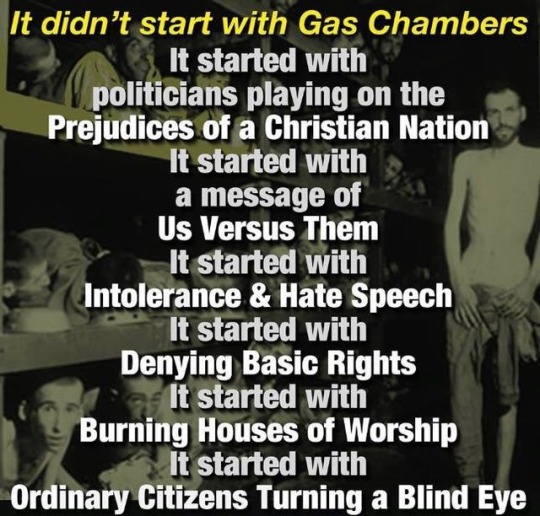
“The white nationalist movement [in the US] predates Donald Trump and it will be here after Donald Trump. The white nationalist movement began because of the defeat [of white racists] by the civil rights movement. It had to understand why it was defeated and its theory was that it lost, not because blacks were intelligent, or hard-working or demanding and deserving of equality and equity in American society, but that…they created a theory that it was a “Jewish Cabal,” that it was a conspiracy to enslave white people. That is really the birth of white nationalism.
If you read their writings, if you look at their literature, if you look at the caricatures on their flyers, what you will often see is that the thread is antisemitism.
Antisemitism, as it is explained within white nationalism, is the paper upon which all other forms of white nationalist bigotry are formed. So whether you’re talking about Blacks, whether you’re talking about immigrants, whether you’re talking about gays and lesbians, whether you’re talking about Muslims—they are all, in the minds of white nationalists, controlled by a Jewish conspiracy that seeks to strip away white people’s rights in the United States.
These social movements are simply playing off of bigotries that already exist in society. The goal of white nationalists is not to spread hate, but to seize the state…the way that they seize the state is by using vehicles of bigotry to build mass movements and to build power and fear—to do exactly that.
We cannot be isolated in this moment. The white nationalist movement wants us to be isolated. It wants us to be alone. But there are more of us than there are of them, and by coming together we can build the momentum to build the solutions about an America we see. One that is united. One that moves us forward. One that’s grounded in opportunity and equity.”
Oh several. I used to write a new one every Halloween, to give away for free. Each was (loosely) based on one of my favourite horror films. You can read them (still for free) at my Patreon. I’ve linked them below.
You could also check out my two Halloween-centric Royal Occultist stories for Lovecraft e-Zine (both of these are free to read as well). The first was inspired by Roger Zelazny’s novel, A Night in the Lonesome October, while the second drew from one of Lovecraft’s unfinished fragments:
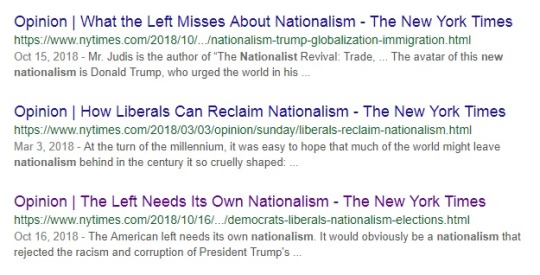
Trump called himself a nationalist he called himself a nationalist he blatantly and knowingly called himself a nationalist fuck fuck fuck fuck fuck fuck fuck fuck
At this point he could just flat out say he’s a fascist and conservatives would not give a shit
I 100% expect that’s what’s coming next.
How long until the NYT runs articles about “is nationalism actually good?” with the same false neutrality that’s helped legitimize everything else he’s done?
Hey do y’all fucks remember two years ago when just before the election all these “don’t vote both parties are bad” or “vote independent!” Posts were going around and then Trump won and now two weeks before midterms there’s all these “don’t bother voting, revolution is the only way!” And “your vote isn’t gonna matter and is an ineffective way to protest” posts are going around? Yeah knock that shit right the fuck off, don’t fall for it and get your ass to the polls, we are not doing this again.







 Aliquid de Magis