The average human body has about 1.3 gallons (5 L) of blood
It accounts for 7% of total body weight
Veins are large blood vessels carrying deoxygenated blood to the lungs. The lungs oxygenate the blood with oxygen from the air. Then, the blood goes into arteries. Arteries are large blood vessels that carry the newly oxygenated blood to every corner of the body
This is a map of major arteries and veins in the human body.
If one of these arteries or veins is cut open, the victim may bleed out within several minutes. Bleeding to death is called desanguination (massive loss of blood) or exsanguination (complete loss of blood)
Alcoholics or those with liver disease are particularly at risk for de/exsanguination because an impaired liver reduces the blood’s clotting ability
Bleeding(scientifically known as Hemorrhaging (America)/Hæmorrhaging (Britain))
Class I – loss of 0-15% (0-0.75 L) of a victim’s blood; vital signs stable; transfusions and saline solutions not necessary; just to be safe, victim should not engage in vigorous physical activity
Class II – loss of 15-30% (0.75 L-1.5 L) of a victim’s blood; victim experiences a faster heartbeat; skin cools and appears pale; victim appears dazed or irritable; saline solutions may be necessary
Class III – loss of 30-40% (1.5 L-2 L) of a victim’s blood; blood pressure drops; heart rate increases; victim goes into shock; victim is mentally deficient, dazed, has difficulty moving, is hard to understand, and acts strangely; saline solutions and blood transfusions necessary
Class IV – loss of 40% (+2 L) or more of a victim’s blood; victim passes out; saline and blood; heart goes into ventricular tachycardia (the heart beats unsustainably fast); transfusions necessary; require resuscitation to prevent death;
A cancer patient was found with just 25% (0.9 L) of her blood in her system and survived. She lost the blood over a period of weeks, not all at once
Donating blood about takes 8-10% (0.4-0.5 L) of a person’s blood
The average woman loses 1 cup (0.24 L) of blood during menstruation
Redheads do not bleed faster than other hair types
The Color of Blood
Humans and other mammals have red blood because of a compound called hemoglobin. Blood from veins is darker red than blood from arteries because arterial blood is oxygenated. Veins appear blue because of the light-scattering properties of skin, not because the blood is actually blue.
Victims of carbon monoxide poisoning have bright red blood
Victims of cyanide poisoning have bright red blood in their veins
Skinks have green blood
Squid, cuttlefish, snails, slugs, and horseshoe crabs have blue blood
Sea squirts and sea cucumbers have blood that turns yellow when exposed to oxygen
Blood Types
Blood types are determined by the presence or absence of antigens – substances that trigger an immune reaction to foreign objects in the body. An A blood type has A antigens, a B blood type has B antigens, an AB blood type has both A and B antigens, and an O blood type has neither A nor B antigens on red blood cells, but A and B antigens in the plasma
Type O can donate to A, B, AB, and O; Type A can donate to A and AB; Type B can donate to B and AB; AB can donate to AB
The universal blood cell receiver is AB
There is a third antigen called the Rh factor, which can be present (creating a + blood type) or absent (creating a – blood type)
The universal red cell donor is O negative
The universal plasma donor is AB positive
O+ and A+ are the most common blood types
B- and AB- are the least common blood types
Blood types are inherited through the parent. This Red Cross chart will help you figure out someone’s blood type
Tumblr makes it look really low quality, but they’re fine if you click on them~ 🙂
Tutorial time! Here’s a quick hair tip tutorial for eat-my-shxrts (I’m working on the eyes/facial features one, but since I finished this one I thought I’d post it 🙂 Hope this is helpful, I wish I was better at explaining how I draw XD
I also included a process gif! Featuring some of my faves with varying hairstyles~ 🙂 ❤
Within the German school of fencing,Bloßfechten or “bare fighting” is the technique of (armed) fighting without significant protective armour such as plate, mail or a brigandine.
Vulnerable targets like the head and upper torso are totally
unprotected except for normal clothing during Bloßfechten. The lack of
significant torso and limb protection leads to the use of a large amount
of cutting and slicing techniques in addition to thrusts. These
techniques could be nearly instantly fatal or incapacitating, as a
thrust to the skull, heart, or major blood vessel would cause massive
trauma. Similarly, strong strikes could cut through skin and bone,
effectively amputating limbs. The hands and forearms are a frequent
target of some cuts and slices in a defensive or offensive maneuver,
serving both to disable an opponent and align the swordsman and his
weapon for the next attack.
(description via wiktenauer)
The other form of armed historical combat is Harnischfechten, or “armoured fighting”, which is fighting in protective gear, most specifically plate armour. The techniques used are rather different, as the need to circumvent the protective armour completely changes the way in which the longsword is used.
Now this is something that by now any HEMA practitioner should be familiar with, or at least those who are learning German martial arts (Kunst des Fechtens), but just to reiterate: If you fence with longsword, and you are using techniques that assume that your opponent is not armoured, and likewise you are defending yourself as if you are also not wearing any armour, what you are practicing is bloßfechten.
This is Bloßfechten:
And so is this:
So what makes these bloßfechten is the fact that they are attacking and defending themselves with longswords as if they are not wearing plate armour. Only wearing t-shirts and light gloves, like in the top drill, can be referred to as minimal gear fencing, but wearing additional safety gear for added protection against more committed attacks does not change the nature of the techniques.
In other words, wearing your full competition-grade SPES gear, sparring gloves and joint protection does not transform the type of the fencing you are doing, it’s still unarmoured fencing!
For comparison, this is Harnischfechten:
But so is this:
So though these last two chaps are wearing gear that is not very far off to what you might find in some unarmoured longsword competitions, what is key to understand is that they are using Harnischfechten techniques (or Fechten in Harnisch zu Fuss, literally “fighting in armour on foot”), specifically designed to overcome the problem of fighting men clad in full plate armour. Please note that this is quite different from the random armour bashing we see in modern armoured combat games (HMB, ACL etc).
Which brings me to the last point. Bloßfechten is the type of armed combat, and some argue that to practice it properly you should attempt to recreate the conditions in the Fechtschule (a 16th century competition
based on the unarmoured duel with safety rules barring the more lethal
and damaging sort of moves within the limitations of available equipment
and commonly agreed concepts of acceptable risk at the time), but to claim that bloßfechten and modern “competitive longsword/sport HEMA” are two different things is also a misconception.
So this is Bloßfechten:
But then again, so is this:
The gif is just a small training exercise, and the video is an actual competitive tournament (Fechtschule Brugge), but the fact that one is an actual competition (the dreaded ‘sport’ word!) and the other one isn’t doesn’t change the fact that they are both f@$%&*! bloßfechten!
So the next time someone tells you they don’t compete nor fence for points, or that they don’t believe in wearing safety gear, or that they only wear period shoes etc because they “do proper bloßfechten”, be safe in the knowledge that they are probably quite full of it.
A selection from 18th Century and Regency Thieves’ Cant.
TRIG a bit of stick, paper, &c., placed by thieves in the keyhole of, or elsewhere about, the door of a house, which they suspect to be uninhabited; if the trig remains unmoved the following day, it is a proof that no person sleeps in the house, on which the gang enter it the ensuing night upon the screw, and frequently meet with a good booty, such as beds, carpets, &c., the family being probably out of town. This operation is called trigging the jigger. 1819
DOSE Burglary, a breaking open a House, Lock, Door, etc. as, He is cast for Felon and Dose; i. e. found Guilty of Felony and Burglary. 1737
DUB LAY Robbing houses by picking the locks. 1811
MILL a KEN to rob a House. Milling the Gig with a Betty, Breaking open the Door with an Iron Crow. 1737
JACK IN A BOX a Sharper, or Cheat.
BLEATERS they that are cheated by Jack in a Box. 1737
DROP A COG To let fall, with design, a piece of gold or silver, in order to draw in and cheat the person who sees it picked up; the piece so dropped is called a dropt cog. 1811
JASONS FLEECE A citizen cheated of his gold. 1811
SLANG to defraud a person of any part of his due, is called slanging him ; also to cheat by false weights or measures, or other unfair means. 1819
STING to rob or defraud a person or place is called stinging them, as, that cove is too fly ; he has been stung before; meaning that man is upon his guard ; he has already been trick’d. 1819
BLACK ART The art of picking a lock. Cant. 1811
BURN THE KEN Strollers living in an alehouse without paying their quarters, are said to burn the ken. CANT. 1811
BUZ to buz a person is to pick his pocket. The buz is the game of picking pockets in general. 1819
CROSS-FAM to cross-fam a person, is to pick his pocket, by crossing your arms in a particular position. 1819
DIVE To dive; to pick a pocket. To dive for a dinner; to go down into a cellar to dinner. A dive, is a thief who stands ready to receive goods thrown out to him by a little boy put in at a window. Cant. 1811
DRAWING THE KINGS PICTURE Coining. 1811
HOIST the game of shop-lifting is called the hoist ; a person expert at this practice is said to be a good hoist. 1819
ARCH-ROGUE the Dimber-Damber, Uprightman or Chief of a Gang; as Arch-Dell, or Arch-Doxy signifies the same Degree in Rank among the Female Canters and Gypsies. 1737
RAMP to rob any person or place by open violence or suddenly snatching at something and running off with it, as, I ramp’d him of his montra; why did you not ramp his castor ? &c. A man convicted of this offence, is said to have been done for a ramp. This audacious game, is called by prigs, the ramp, and is nearly similar to the Rush. 1819
RUSH the rush, is nearly synonymous with the ramp ; but the latter often applies to snatching at a single article, as a silk cloak, for instance, from a milliner’s shop-door ; whereas a rush may signify a forcible entry by several men into a detached dwelling-house for the purpose of robbing its owners of their money, &c. A sudden and violent effort to get into any place, or vice versa to effect your exit, as from a place of confinement, &c., is called rushing them, or giving it to ‘em upon the rush. 1819
STALL UP To stall a person up, (a term used by pickpockets,) is to surround him in a crowd, or violent pressure, and even sometimes in the open street, while walking along, and by violence force his arms up, and keep them in that position while others of the gang rifle his pockets at pleasure, the cove being unable to help or defend himself; this is what the newspapers denominate hustling, and is universally practised at the doors of public theatres, at boxing matches, ship-launches, and other places where the general anxiety of all ranks, either to push forward, or to obtain a view of the scene before them, forms a pretext for jostling, and every other advantage which the strength or numbers of one party gives them over a weaker one, or a single person. 1819
This is arguably one of the most important concepts in martial arts that I’ve ever seen, explained with the simplest experiment possible. Warzecha is fantastic.
This is a HUGE file that I’ve been working on for a while and will continue to – feel free to ask for clarification on confusing or missing stuff, so I can explain better!. Check it out under the cut!
*I am a U.S. Marine, and this is a compilation of my and a few other Marine’s experiences! Other militaries and branches definitely have different terminology and experiences, and you can take and leave what you want from this for your story.
thank you so much!! I…okay!! i’m not particularly good at armour or teaching or well anything really so if anyone wants to point out mistakes or add to this feel free to do so, i’m not sure what part you struggle with so i included shading too? I hope this helps! I’d suggest looking at different medieval armour suits to have a better idea of the parts and shapes but here goes nothing
HEREis a much better explanation with all the layers and a much more realistic approach by perplexingly that your should definitely check out, also their art is fantastic!!
HERE you can find armor parts and if you click around you will see tons of armor reference
Not to mention leaving open thighs and arms in critical areas with no armour.
Sure just go sword fight people with arteries available for them to stab it’s fine. So long as men get to see you’re women and you’re sexy it’s fine.
The only reason I can see to leave your legs exposed like that is to air out the privates since that island is probably hot af. I’d probably go around wearing a dress and sandals all day if I was told I couldn’t be naked.
Aren’t the Amazons based in Greek mythology? If so, weren’t there gladiatorial fights where women could be naked too? If so, technically they could all just be fighting naked. It’s only training and they’re friends/comrades in arms.
I do have a beef with them high heeled boots though. Fairly sure the didn’t have those in Greek times. So inaccurate.
(If anything and everything I’ve typed here is untrue, feel free to correct me politely or with funny af gifs XD)
OMG I’m a classicist this is my JAM
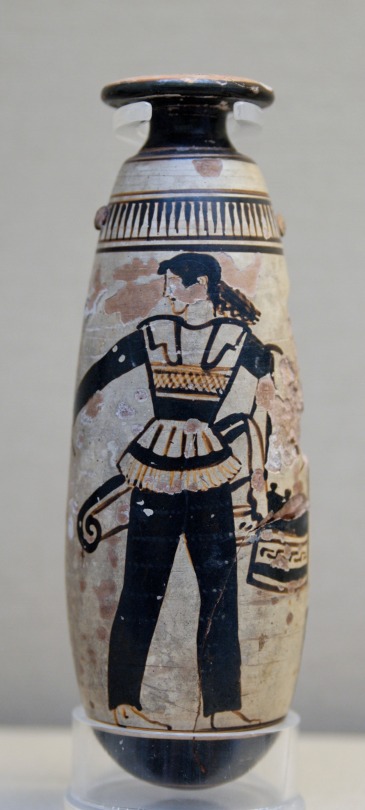
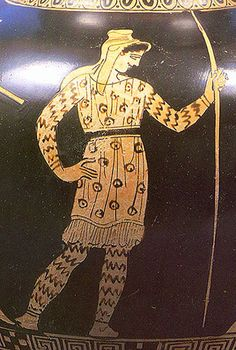
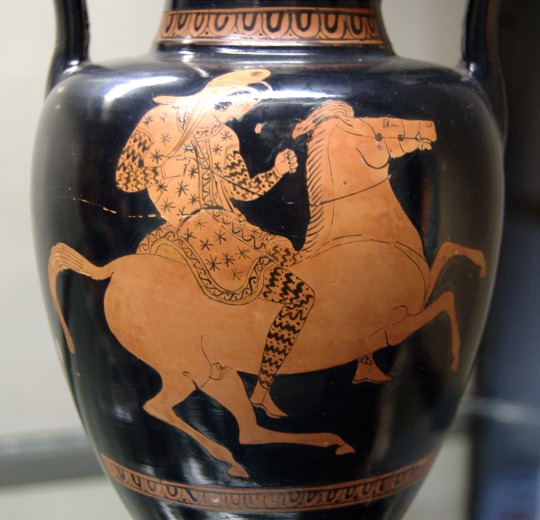
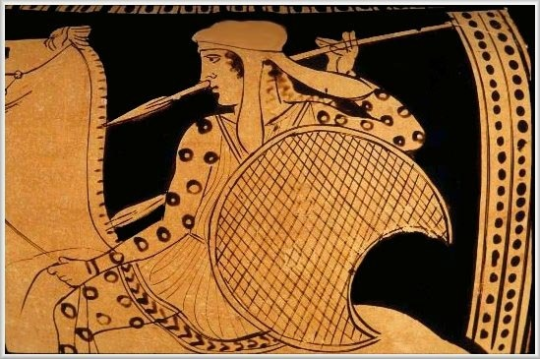
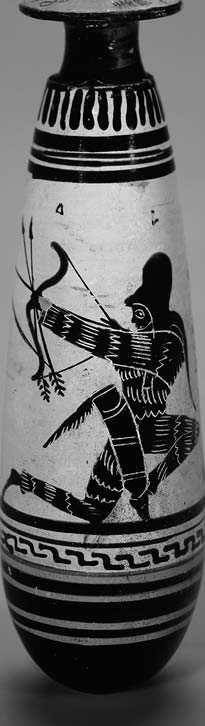
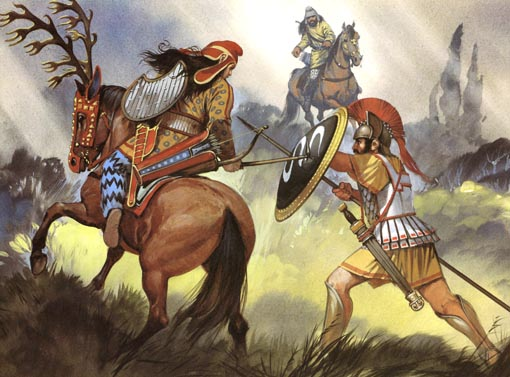
You aren’t the wrongest. (You are the rightest about the high-heeled boots. Those are a nope in terms of practicality and historicity). The Amazons were a semi-mythic group of warrior women who hailed from Thrace and/or Scythia (basically, “North-east ish”). Whether there actually were warrior women from that area is debatable. Greek depictions of Amazons varies quite a bit. In early art, they were depicted as female versions of Greek hoplites, with the same costume- think tunic-y thing with very short skirt, torso armor (but not with boob cups, and definitely covering the shoulders because how the hell else it it gonna stay up), greaves, helmets, big-ass shields, and knifesticks spears.Over time, elements of Thracian and Scythian costume made their way into depictions of Amazons- things like bows and javelins, a fuckton of horses, patterned tunics, boots, pointy hats, and stripey pants. And maybe tattoos (It’s kinda hard to tell if some craftsmen were trying to depict sleeves and sucked at it, or were genuinely trying to draw people with ink in their skin). The most common depiction of Amazons was as an archer on horseback, with a recurve bow, wearing long-sleeved tunic, belt, furry hat, trousers, and boots. Optional but popular is a half-moon shield.
This one’s pants are boring, but you can see her quiver kinda behind her:
This one clearly shows the hat, pants, tunic, and sassy attitude:
On a horse, bomb-ass christmas tunic, fancy pants fancier than any fancy pants you will ever wear:
horse, half-moon shield, aerial knifestick javelin, complete lack of fucks:
pants and/or furry onesie, big hat, recurve bow, ancient speed-shooting techniques only recently rediscovered:
As for nudity, Amazons were rarely depicted naked (except for the odd stray boob) until the Hellenistic era (300′s BC), and on into the Roman Era, especially during it’s midlife crisis phase (the century surrounding 0 AD, roughly) and it’s post-midlife-crisis have-sex-with-everyone, kill-all-your-neighbor’s-chickens-and-eat-them-deep-fat-fried-all-at-once, act-surprised-when-you-contract-500-venereal-diseases-and-clog-your-arteries phase (Nero-ish onwards-ish. And yes, that is definitely the actual term used to refer to that period of Rome’s history, and not simply a sweeping generalization).
Gladiators were purely a Roman thing. You do get arenas and gladiators in Greece and Turkey and whatnot, but that’s only because the Romans invaded and put them there because bloodsport made them less homesick or something, I guess. Female gladiators were certainly a thing, and may have fought naked for entertainment value (TBH I’m too lazy to go look it up at the moment), but the thing is, gladiatorialism was a sport, just like modern taekwondo, judo, and fencing are sports. Yeah, people are going to get injured, but they didn’t die nearly as often as our modern popular image would have you think, and their fighting style wouldn’t really be all that useful on a battlefield, because they had rules to follow and their purpose was NOT to kill their opponent, but rather to provide an entertaining fight. Gladiators actually considered it a point of pride to never kill an opponent in the arena.
Back to pants, because pants are interesting. To the Greeks and Romans, pants were just about the weirdest fucking thing they’d ever seen. Literally all of their clothes consisted of drapey rectangles. If they were feeling fancy, they’d stick a belt or a nice brooch on it. Pants are a complicated, relatively form-fitting garment and it just freaked those poor Greeks right out. Pants were a visual signal for “really fucking foreign”. The furry-hat-and-pants depiction I mentioned above was also the exact same costume that male Scythian warriors were depicted in, and the androgyny also freaked out the poor androcentric Greeks. Often, in vase art and such, the only way to tell an Amazon from a male Scythian is that the women have white skin. They lack of visible gender differences screamed “foreign” to the Greeks. There are several mythic stories about the origins of pants, and they all attribute their invention to women. One story even has Medea (of “fuck you Jason, I’m going to murder our kids to get back at you you utter fuckpile” fame) inventing pants.
Historically speaking, pants were invented because people found themselves needing to ride horses to get places, and not-pants are really inconvenient for that. Since both men and women rode horses, both men and women wore pants. (There’s also a fair bit of merit to the theory that the Amazon legend comes from actual Scythian female horse-archers, since once you put a person on a horse and give them a recurve bow, upper body strength advantages don’t mean shit). Pants were actually a key bit of military technology. Ancient China was having a hell of a time fighting off all these pants-wearing horse nomads (this was like 300-200 AD-ish) until the state of Qin finally decided to collectively put on pants and get on horses. They then preceded to kick the nomad’s pants-wearing asses and unify the warring states of China. Because pants.
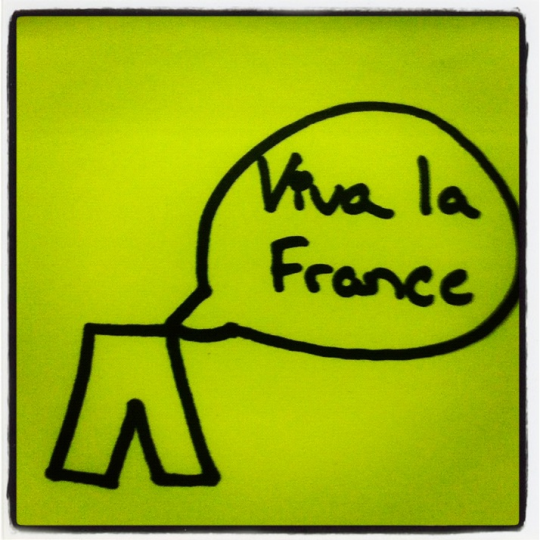
Of course, because of bullshit, pants came to symbolize femininity and barbarianism to the Greeks and Romans. They think you look very silly in your uncivilized female legsleeves. Funny sidenote, the Romans avoided pants whenever they could, but when they kept invading more northerly places, shit kept getting colder. Winters in Northern Gaul (modern day France) were cold enough that soldiers actually had to put on pants, and the Romans thought this was significant enough that they called the region “Gallia Bracata”, which translates to “Trousered Gaul”, or, if you’re slightly more imaginative, “Pants France”.
(This is just the first image that came up when I googled “pants france”)
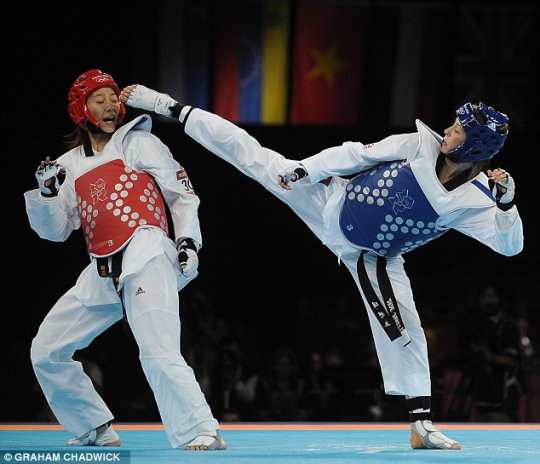
So, to bring this all back around to Wonder Woman, I’m really not a fan of those costumes. They aren’t practical and they aren’t accurate, and they’re also cliche and just like every other sexy STRONG female warrior in fantasy media (I will direct you to @bikiniarmorbattledamage for more details and feminist rants). They could have kept the definitely necessary to show thigh skin by dressing them as Greek hoplites, but then they’d have had to give them helmets and cover their precious hair, and give them actual for reals breastplates that protect above the breasts (seriously collarbones aren’t made of steel and PROTECT YOUR SHOULDERS did you see what happened to poor Bucky), and aren’t molded to the torso (seriously- if it’s stiff enough that you can’t stab through it, it’s stiff enough that you can’t move in something that tight). And even if it is only training, and for some reason they’re not hitting anywhere that’s exposed (maybe training to hit only really small target areas? IDK), the armor depicted wouldn’t work- there’s clearly no cushioning under it, and armor (any kind, really, plate, mail, scale, all of it) really doesn’t work unless you’ve got a layer of padding beneath it. Modern combat sports with limited target areas don’t have form-fitting breast-cupping gear, they have thick pads that protect. For instance, two women competing in Taekwondo:
Not at all coincidentally, here’s some modern body armor worn by female soldiers:
Incidentally, the Scythians also had similar armor, made of scales, woven leather, or some form of lamellar.
Anyway, the movie makers could have their characters showing a bit of thigh (if it’s that important that they be sexy somehow) and maintain some sense of accuracy with thick torso armor, which at least protects the vitals, If they wanted to really get back to the idea of Amazons as terrifying warrior women who act as equals to men and fight as equals to men, and keep the Ancient Cultures motif, these ladies would be wearing stripey pants and furry hats.
Basically, I think it would be awesome to put Wonder Woman in stripey pants.
Alrighty, so I just spent an hour looking up stuff about ancient pants. You don’t have to dislike DC’s costumes just because I do, though- they’re just not very accurate to either ancient Greek culture, or to ancient Greek depictions of Amazons. And there’s no pants.
TBH now I kinda want to redesign Wonder Woman to be a Scythian Amazon. Lemme know if you want me to tag you or whatever if I end up posting a drawing of Wonder Woman in stripey pants.
*bangs fists on the table in rhythm* STRIPEY PANTS WONDER WOMAN STRIPEY PANTS WONDER WOMAN
BECAUSE PANTS.
PANTS FRANCE.
… I love this historical note. So much.
‘you look very silly in your uncivilized female legsleeves’ is a phrase I long to drop into casual conversation
This is a great post for a lot of reasons and since we’re talking pants being invented in China, here’s the oldest-known pants. They were found in two tombs in what is now northwestern China. These pants were radiocarbon dated to
1122-926 B.C. Fragmentary pants found in a neighboring tomb were of the same style and were slightly older,





 Aliquid de Magis